Category Archives: Success
Slow and steady wins the race
Slow and steady wins the race — and school testing proves it.
I love getting success stories from Barton tutors — like this one.
One of my students did not talk until he was 4 years old, had speech therapy for years starting in preschool, had been in special education since Kindergarten, and was even retained once.
When I met him at the end of 8th grade, the special education teachers had just told his parents that they had tried all they could, but he was still unable to read even the most decodable first grade words.
This student is probably my most severely dyslexic student, but also the most motivated. He has worked SO hard and has even driven to my house for a lesson when school has been cancelled due to snow.
We have made slow but steady progress.
He is a senior in high school now and just finished Level 8.
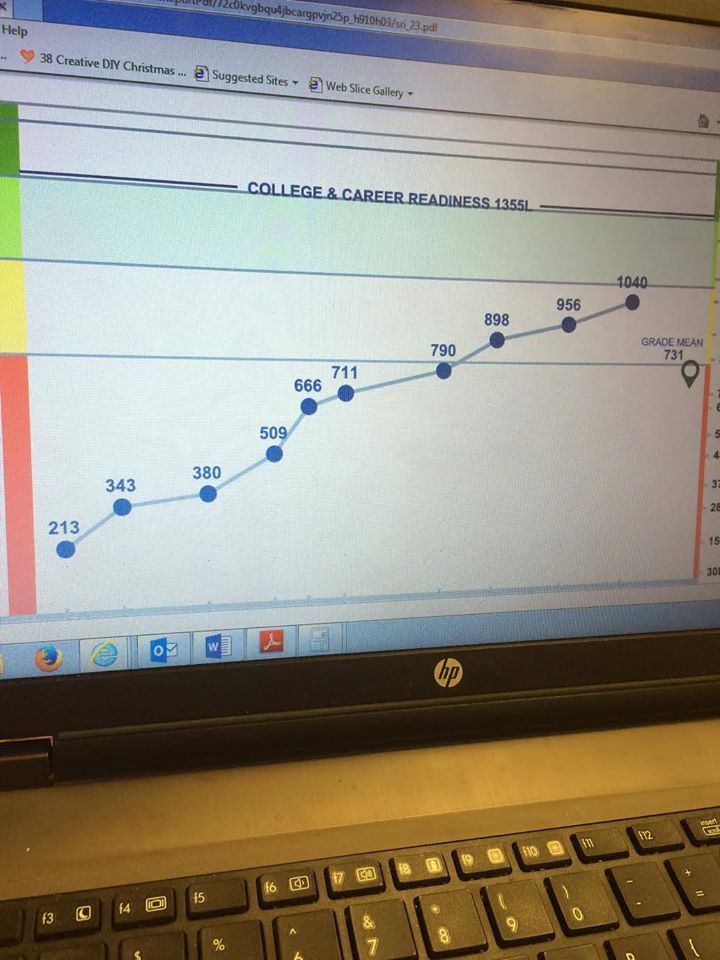
I got a text from him today that included a picture he had taken of his computer screen at school (see above) showing a graph of his progress on a school reading test – which is used to determine if a reading class is needed or not. Students need 1000 points in order to get out of the reading class and be freed up to take an elective.
His first score, 213, was from September 9, 2013. His last score, 1040, is from today, March 17, 2015.
I am just so proud of him and had to share the good news!
Karin Merkle
Certified Barton Tutor at the Advanced Level
Rapid City Dyslexia Care
Rapid City, SD
My Dyslexia Story
This email, which was sent to me by a homeschooling parent in Florida, touched my heart.
Our story begins when my son, Larry, was in kindergarten. He missed out on play time because he struggled to identify letters and their sounds.
In first grade, sight words caused him to miss play time.
In second grade, timed reading and math became 75% of his grade. Third grade would bring the FCAT. I was told if a student cannot read 150 words a minute, they probably would not be able to finish that test.
So we homeschooled Larry in third grade. We also asked the public school to test him. They said he had ADHD. But by then, I had been homeschooling for half a year and I felt that probably was not true. So I hired a private psychologist to test him. It turns out our son had “classic dyslexia.”
Homeschool continued through 3rd and 4th grade. Although I slowed everything down, I continued using the same curriculum – but it wasn’t working. Larry was extremely frustrated. By 5th grade, he and I were at our wits end. Shortly after starting the school year, Larry broke down and said he was stupid and wanted to kill himself. That still brings tears to my eyes.
On that very day, I knew I had to find an answer. So I got on the computer and started frantically searching for a way to teach my son. I decided to go to a message board for parents with dyslexic kids. The ONLY thing they were talking about was the Barton Reading & Spelling System – which level they were finishing, and who had the next one.
Right then and there, I googled Susan Barton. I watched your video on dyslexia that was on your website. I was overcome with emotion as I listened to you talk about your story and heard your passion for dyslexic kids. You were the first person who explained dyslexia in detail, both its weaknesses and STRENGTHS. I called Larry in to listen to part of it and I told him, “This is who you are. You are a brilliant and amazing boy to have learned as much as you have – despite the way I am teaching you.”
You promised that with the Barton System, my son would read at or above grade level and his spelling would improve, and I believed you.
Needless to say, homeschool has not been the same. Larry is now a 7th grader, is in Level 6 of the Barton System, and now believes that he can go to college and excel.
Thank you. Susan. I am forever grateful that you have become an important part of Larry’s life and education.
As this parent shared, “slower and louder” will not work for a child who has dyslexia.
To hear Susan Barton’s advice for homeschool parents who use (or are thinking about using) the Barton Reading & Spelling System, watch my free on-line presentation by clicking on the following link:
http://www.bartonreading.com/index.html#homeschool
By the way, that presentation also contains useful advice for parents thinking about homeschooling.
Could it be dyslexia?
One mother’s journey to help her son
by Debbie Copple
Shared with her prior written permission
“Could it be dyslexia?” I asked my son’s kindergarten teacher. “No, it’s not dyslexia. Don’t worry. He just needs to work harder,” she reassured me.
My bright boy, who had eagerly waited for the day he could go to school to learn to read, had begun to tell me that reading was stupid, and school was stupid.
“Could it be dyslexia?” I asked my son’s first grade teacher. “No, it’s not dyslexia. He just needs to work harder,” was again the response that I received.
This was after he had become so frustrated one evening that he cried, “Reading is stupid. It makes my brain hurt,” and “I am stupid.”
I sought help for my son and was told that Vision Therapy was what he needed. Over $6,000 and 1 year later, he was even further behind. “Could it be dyslexia?” I asked his Vision Therapist. “No, it’s not dyslexia. He could do better, he just chooses not to,” she told me.
In second grade, Casey attended a public school. His teacher told me that he was reading on a Kindergarten level. I was shocked. “Could it be Dyslexia?” I asked the teacher and the reading specialist. “No,” was their reply.
Meanwhile, my bright boy was struggling, his self-esteem suffering, and he had behavior problems at school. Casey was heartbroken to see the U’s on his progress reports.
“Do you test for dyslexia?” I asked a psychologist. “Yes,” he told me. While waiting for the results, I searched the internet for information about dyslexia. I found a very knowledgeable woman, Susan Barton. She told me what areas of weakness (indicators of dyslexia) I should look for in his testing report.
When the psychologist shared the results, the weaknesses – the indicators – were there. I asked if my son had dyslexia and was told, “Dyslexia cannot be tested. Dyslexia is an all-inclusive term for learning disabilities.”
I stopped asking “Could it be Dyslexia?” I knew the answer. With God as my guide, I learned to tutor my son using an Orton-Gillingham based system, the Barton Reading & Spelling System.
Casey’s grades quickly improved from U’s to A’s and B’s. His DIBELS scores improved from “High Risk” to “Above Average.” After only 4 months of tutoring, he was reading at a third grade level. Reading and spelling finally made sense.
Dyslexia is NOT determined by how great a parent you are, how much education you have, or how much money you have. Dyslexia does not discriminate.
Parents, you must listen to your gut instinct and listen to your child. Professionals can be wrong. They may have a big heart and a higher education degree, but they can still be wrong.
For professionals reading this (teachers, doctors, principals, reading specialists) my hope is that you will take the time to learn more about dyslexia, so that you too can spot the warning signs.
It is NOT my intention to discredit any of my son’s teachers, private schools, or public schools. My intention is to increase awareness. We need to do more to recognize and understand dyslexia.
Parents, if you have ever found yourself asking “Could it be Dyslexia?” the answer is “Yes, it could be.” Please do not wait another moment to get them help. It is their life, their future, their self-esteem.
Homeschooling with the Barton System
Susan Barton loves getting emails like this:
My son, Tom, is about to turn eight and has been struggling with reading since kindergarten. Even at that age, asking him to sit down and read for ten minutes resulted in tears. But we forced him to try.
In first grade, kids in his class were correcting his reading mistakes. He felt very bad about himself. He would often come home sullen and exhausted. He was unable to read anything on his own. He needed help with even the simplest of books.
But he was a great guesser and could figure out a lot from picture clues and context. In fact, the school actually encouraged children to guess at words. But Rick had no strategy to figure out a simple word or sentence, so if there were no pictures, he would simply give up.
By the time he reached second grade, it was obvious that all the hours spent reading at home (and at school) were not helping. He still had no clue how to sound out words.
So last January we took him out of public school and enrolled him in an online charter school in a desperate attempt to help him here at home. That’s where you come in.
That charter school asked us to watch your dyslexia video, which explained things so clearly. We then realized Tom has dyslexia – as does his father. Thankfully, that online charter school had a site license for the Barton Reading & Spelling System, so we were able to get it through them.
Your program has been a miracle for us. We are finishing level 3, and Tom is starting to read on his own. He chooses books for himself and delights in reading them to us. He is so happy and proud of himself.
Thank you for the time and effort it must have taken to develop your program and create those training videos.
Susan Barton is thrilled that so many virtual charter schools – which support home educators – are now providing parents with the Barton Reading & Spelling System.
If you are homeschooling, or thinking about it, watch Susan Barton’s free 30-minute video with advice for homeschoolers by clicking on this link:
http://www.bartonreading.com/index.html#homeschool
Above grade level in just 18 months
Emails like this make all of my hard work worthwhile.
Thank you from the bottom of my heart for developing the Barton System.
My children are homeschooled. My youngest of 5 just could not learn to read no matter how hard we tried. I kept thinking we just weren’t putting in enough effort. So I told him last spring that if we tried harder, he would be reading soon. He was in 4th grade and 9 years old. Well, despite our best efforts, he still could not read.
He did not have the pressures of being in public school, and he seemed not to care that everyone else in the house could read. But when I talked with him privately, he broke down crying and said he felt stupid. Of course, this broke my heart. A friend suggested he be tested for dyslexia.
He’s doing so much better now. He was just retested using the Peabody (PIAT). He scored at the 95th percentile for reading recognition and comprehension. His spelling was at the 53rd percentile — right where he should be for his age.
Considering he was at a preschool level just a year and a half ago, that’s a great result !!!
Your system has made my son realize how intelligent he is — despite having to learn to read in a different way. He no longer feels “less than.”
We are very open about our son’s dyslexia and encourage him to be open as well. It is amazing how many people right around me had similar struggles that I knew nothing about.
Sincerely grateful,
Janet Yates, Homeschool Parent
Winter Haven, FL
We made great gains this summer
Tracie Luttrell, the principal of Flippin Elementary School in Arkansas, just posted this – and gave me permission to share it.
Wouldn’t it be wonderful if students who attended summer school everywhere made such great gains.
Before school ended, we screened all K-12 students in our district whose teachers felt had markers of dyslexia. We found 107 students who “fit the dyslexia profile.”
So we hired 13 teachers to provide each student with one-on-one tutoring for an hour, twice a week, for 7 weeks during June and July using the Barton Reading & Spelling System.
These students made TREMENDOUS gains. The difference in their writing and spelling from the beginning of summer to now is unbelievable!
It got really exciting when their parents noticed the difference. Many parents did not understand the science and logic behind the Barton System, so they did not know what to expect. Parents shared their child’s confidence and reading skills improved, and their children were starting to read billboards and items around the house.
During those 14 one-on-one tutoring sessions, none of our students finished Level 3. But they all made amazing gains. In fact, some of our youngest students are now reading words WAY above their grade level.
These 107 students now feel smart and successful. They are going to SOAR this year in school because they will continue to receive Barton tutoring during the school year.
As soon as school starts, we will screen all students in 1st and 2nd grade who have not already been screened. We will also screen all of our kindergarteners after they have had some instruction.
The key to helping dyslexic students is to catch it early and INTERVENE.
The only requirement of our new Arkansas Dyslexia Law this first year is to screen. But we can’t stop there. We must also provide the help that they need!
When schools and teachers know better . . . we DO better!
My First Adult Student
As you may know, Susan Barton started in this field by tutoring adults with dyslexia. So emails like this make her heart sing.
My first adult student was diagnosed with a ‘learning disorder’ in kindergarten. She graduated from high school, yet she could not read. When I met her, she was 26, fighting to recover from addiction, and had lost custody of her kids.
When I first started tutoring this woman a year and a half ago, she was in an adult literacy program at our local library. A friend of mine had volunteered to work with her using Laubach, but they were not making much progress.
When my friend had to move, she was worried about this woman, who was at such a vulnerable time in her recovery. So my friend asked me to take over. I was hopeful that the Barton Reading & Spelling System would work as well for an adult as it had worked for my younger students.
When I first met this woman, whenever she would try to read something, she would look up after EVERY word for confirmation from me that she had said the correct word. We are now in Book 4. Yesterday, she read an entire chapter in a real book with confidence — without looking up at me, and she was able to self-correct when necessary.
Long story short, my adult student can now read, and she has her kids back.
I am amazed, thankful, and thrilled with my success with such a “hopeless” case. Never ever give up on adults !!!
Barbara Suit, Certified Barton Tutor
Saratoga, CA
Proud Dyslexic Student
Many people who attended my Screening for Dyslexia course last week have asked for a copy of this letter.
Dear Mrs. Barton,
My name is Nathaniel, and I have dyslexia.
This past week, my mom has been attending your Screening for Dyslexia seminar to learn more about dyslexia and how to help others. Each night when she returns to our hotel room, she shares a few highlights of her day. She told me about the emails and letters you are sharing to remind the group why they are there at your seminar.
I wanted to share one more.
My story is similar to many other people with dyslexia. My early school years were filled with much pain and emotional trauma. My first tears, and adding the word “stupid” to my vocabulary, started in Kindergarten. I was only 5 years old.
The phrases, “Try harder,” “Practice,” “Read more,” and “Why can’t you?” were engrained in my head during those early years by teachers.
I had bruises on my fingers from trying so hard to write sentences, and I was pulled out to attend a class for slow readers.
Recess was my favorite part of the school day until 3rd grade. I was punished and humiliated during 3rd grade. I was forced to sit on the wall during recess while all the other children were allowed to play . . . simply because I could not finish my work in class on time. I had to sit there watching my friends play with my incomplete piece of paper. Yet I still was not able to complete it because I could not read it.
After weeks of sitting on that brick wall, I snuck my papers home and tearfully asked my mom to help me complete them so that I could have a couple of days to play during recess. Needless to say, I never returned to that school – thank goodness!
After that, I was finally told that I had dyslexia, and I began homeschool. In fourth grade, I was reading and spelling at a very low first grade level.
But today, I am proud – MORE than proud – to share that I am just weeks away from completing Level 10 of the Barton System. Not only can I now read and spell, but I know LATIN !!!!
I just finished 8th grade at a public school where I received awards in Academic Excellence with a 3.9 GPA. I won first place in our social studies history project, and I have been accepted for high honor classes in high school next year. My test scores show that I am proficient (and even advanced) in math, comprehension, and yes, even reading !!!!
While writing is still not my strong area, mostly due to dysgraphia, my computer sure makes it look like I am a whiz. I still hate to tie my shoes, my “other right” is a common joke, and I occasionally reverse my numbers and letters when I am tired. At times, the Franklin Spelling Ace is still my best friend, and my favorite inventor is the man who created the digital clock.
Now I can spell words like “purely exhilarated” and “euphoric joy” to express my gratitude, but my word is “happy.” Those first spelling rules, like the Happy Rule, changed my tears and fears into a HAPPY, confident and successful dyslexic student.
Thank you, Mrs. Barton.
Your forever grateful and proud dyslexic student,
Nathaniel Porter
Colorado Springs, CO
Reading fluency is not the whole story
Many schools use DIBELS for progress monitoring. But by the end of first grade, DIBELS only checks reading fluency – which means reading speed. But children with dyslexia, even after their reading skills have greatly improved, may never read as fast as the other kids.
And focusing solely on fluency can cause teachers to miss the big picture – as this mother shared in a recent email.
Our daughter is starting 4th grade. She is in Level 5 of the Barton Reading & Spelling System.
The school she attended last year was terrific. But we moved, and the 504 team at this new school has NO CLUE about dyslexia. It is so painful and frustrating to have to continually fight their ignorance.
We explained that she has been professionally diagnosed with dyslexia, and that due to our paying for the right type of private tutoring, her phonemic awareness and decoding skills are now above grade level. So is her reading comprehension.
But they are focused solely on her reading speed (fluency), which as you know, may never completely “normalize.” Who cares?
My daughter says that when she tries to read as fast as the teacher wants, she then has no idea what she read. So what’s the point?
On the state standards test at the end of last year, she scored ABOVE grade level in reading comprehension, science, and writing. And she scored AT grade level in math and in 4 of the 5 strands for reading. The only thing she scored low on is reading fluency.
Yet without our knowledge, this new school pulled her out of Chorus and sent her to the “reading intervention room.” My daughter said there were about 15 other kids in the room. Many could not read at all. They handed her crayons and told her to color a book cover.
After about 10 minutes, my daughter went to the teacher and asked her what they would be doing. The teacher said, “Testing kids.” My daughter replied, “I already was tested, and I should be in Chorus now.” The teacher insisted she had to stay in that room so that the teacher could account for all of the students.
She then handed my daughter a piece of paper, which she brought home. She was supposed to fill in the following blanks. “My name is _____. I like ______. I love ______. I feel ______. I need _____.” After showing it to me, she crumbled it up and cried. I cried, too.
She’s 11, her IQ is probably higher than the teacher, and she does not belong in that class – so we pulled her from it. The school totally disagrees with our decision and warned us, “If she tanks, we’ll be back at this table again.”
Do not listen to them
Parents, do not let anyone at your child’s school lower your expectations. If your child has a dream, ignore the naysayers – and support your child as she follows her dream, as this mother did.
In elementary school, Lisa was in special ed because of her severe dyslexia, dyscalculia, and ADD. She also had buck teeth (the kids called her “beaver”), so she was a walking target for bullying. Lisa had very few friends, and extremely low self-esteem. The bullying became so brutal that I switched her to a more caring private school for junior high.
At the transition to public high school IEP meeting, I was shocked by her low achievement test scores. The IEP team asked Lisa to come in and share what she wanted to achieve in high school. Lisa said, “I want to earn a regular high school diploma and be a cheerleader.”
The team members told Lisa that due to her low scores, she would NEVER earn a regular diploma (a modified diploma was the best she could expect), and they shared that no special ed student had ever become a cheerleader.
Lisa hated her special education English class. It took half a year and countless meetings, including one with the head of special ed for the district, to convince them to give Lisa a chance to be in a regular English class. They warned her that she would have to prove she could handle the material to remain in that class.
The next year and a half was a real struggle. Lisa put in extremely long hours of study and work. She even made up the first semester credit of that Freshman English class by going to night school at a local community college (a 2 hour commute) because the high school said it was not a “credit recovery” class.
Something amazing happened at the end of her sophomore year. Lisa was selected to be on cheer, and it changed her life forever.
She learned her cheers, learned to do the stunts, learned that people could like her, and started to believe in herself – all while maintaining a high enough GPA to stay on cheer.
In her junior year, Lisa became her own advocate at her IEP meetings. She insisted she had what it takes to earn a regular diploma. The IEP team did not believe her, but agreed she could try.
Fast forward to this year – her senior year. Lisa is doing extremely well. She has a 3.6 grade point average. She has just passed all 3 of the required graduation tests, so she will get a regular diploma.
Yesterday, we had her final IEP meeting. Not one of the people who had originally told her she could not be on cheer, or get a regular diploma, showed up to congratulate her. I realize they are busy people, but I so much wanted to tell them NOT to give up on students – and to give them a chance to follow their dreams.
Lisa is proof that through hard work and dedication, dreams really can come true.